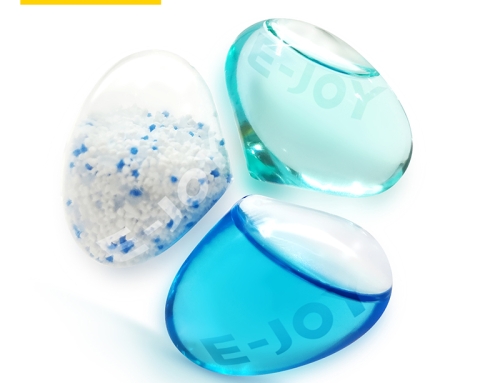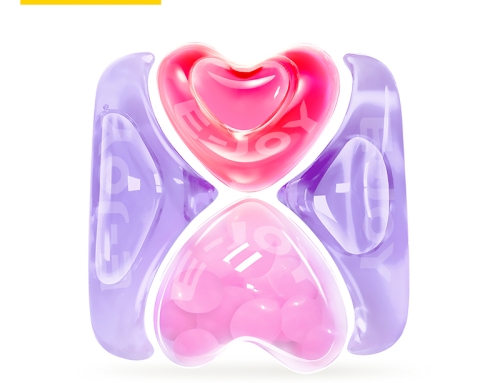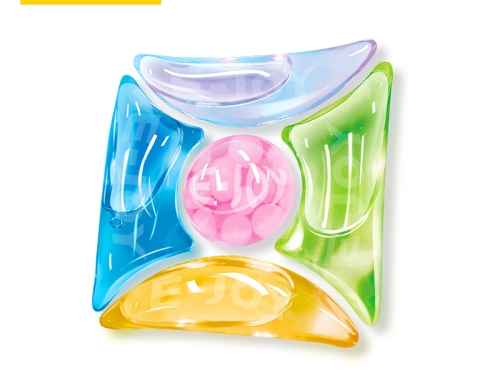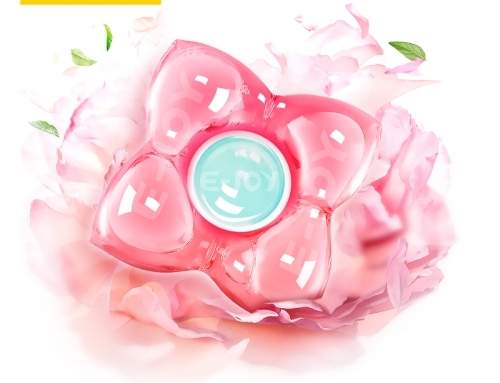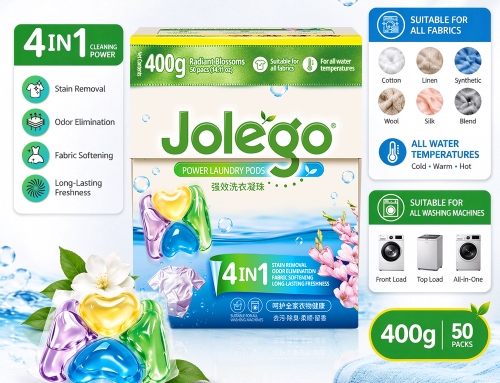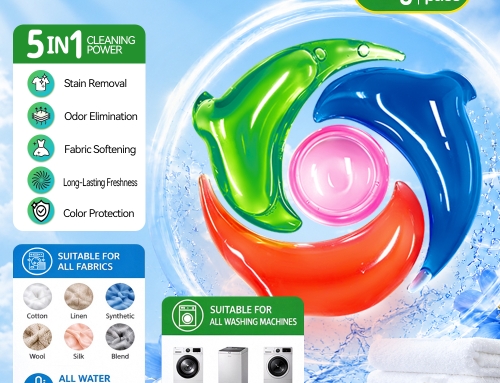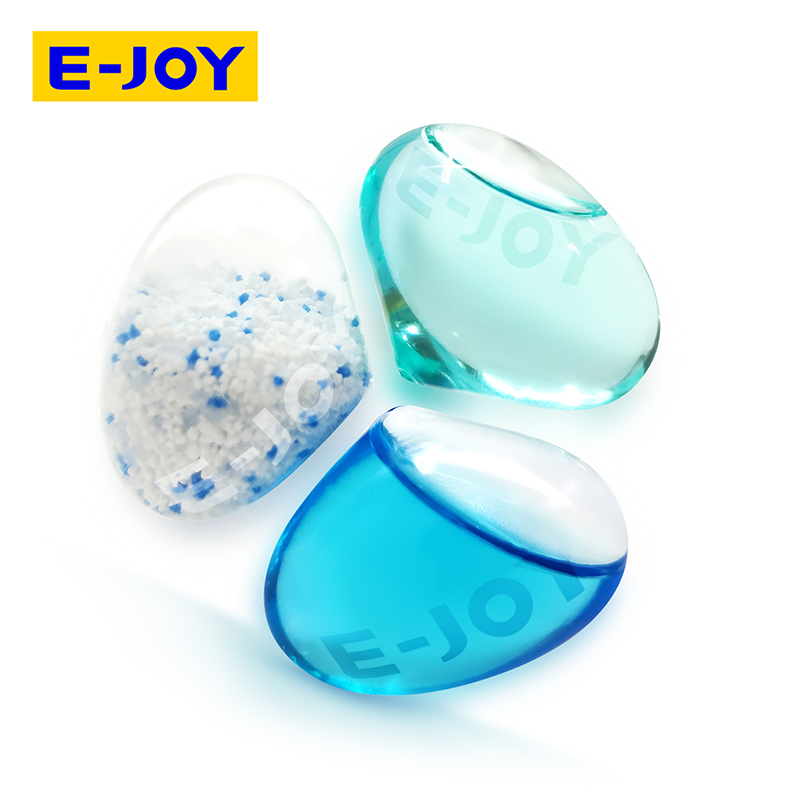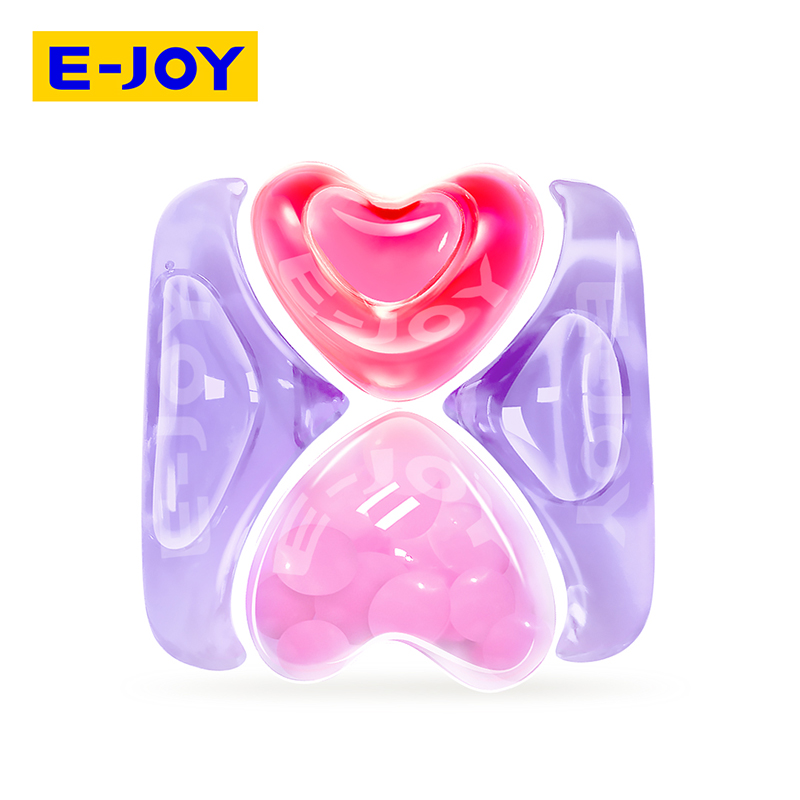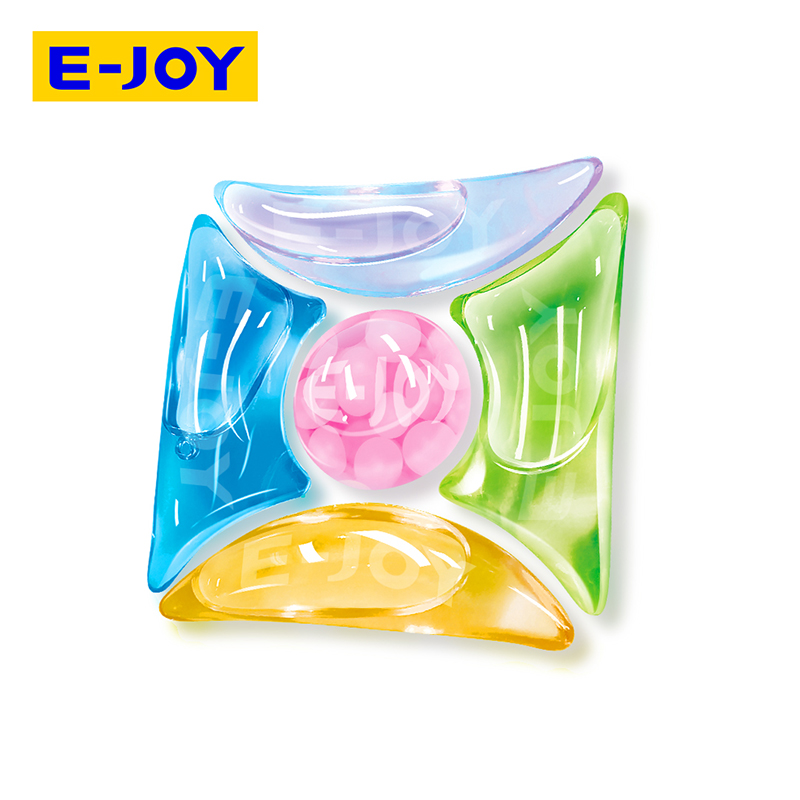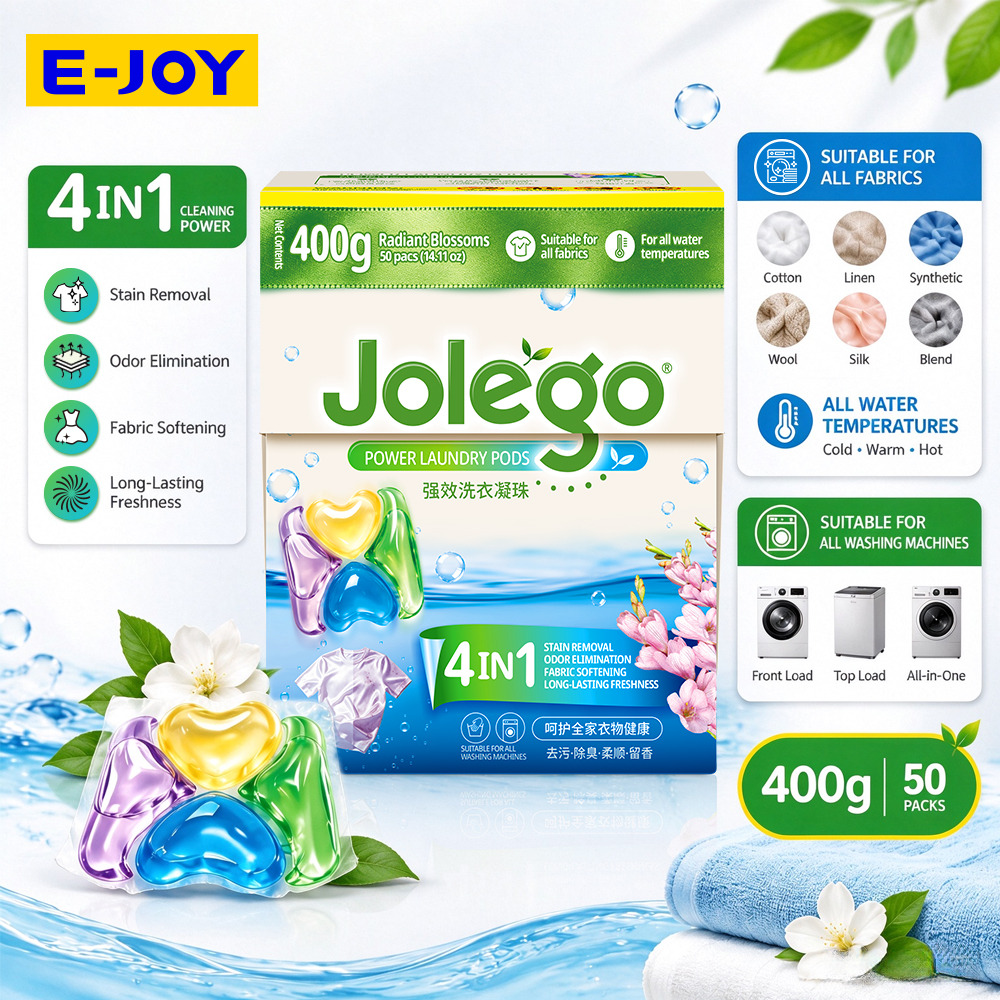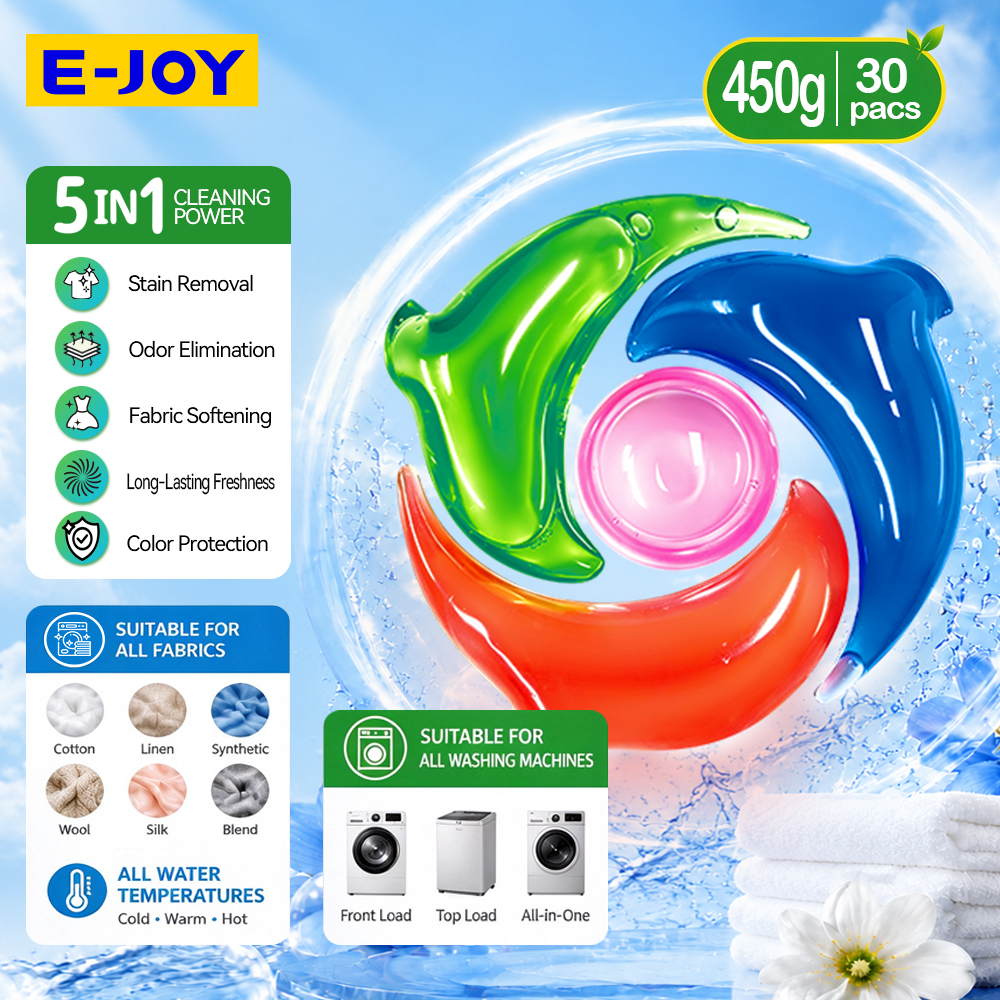

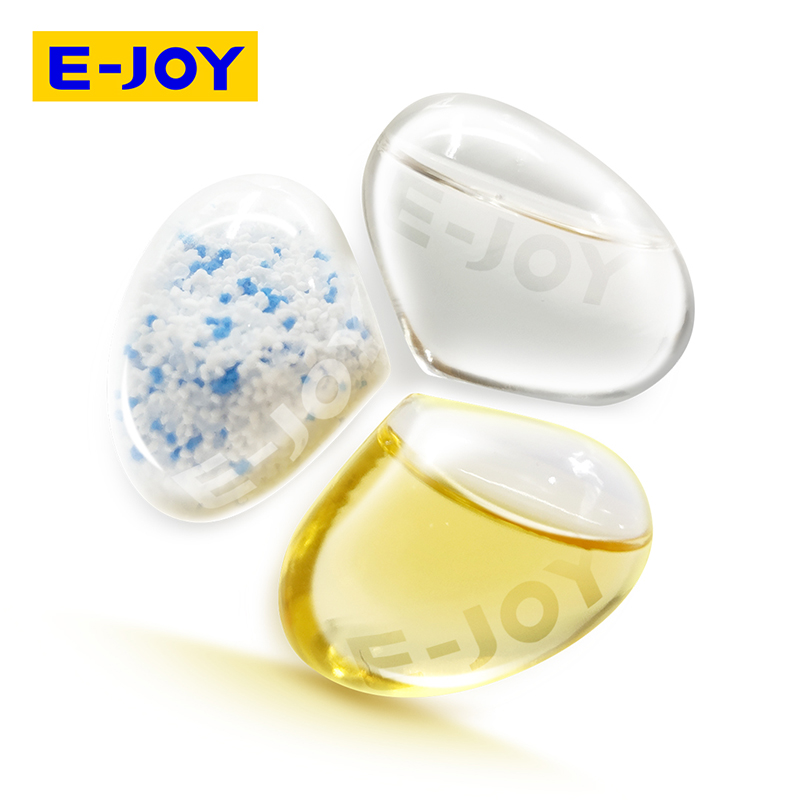
Dishwasher pods manufacturing involves several important steps. These include formula mixing, film forming, filling, sealing, testing, and packaging. Each step needs proper control. In addition, the detergent formula must work well with the water-soluble film. This guide explains how dishwasher pods are made. It also helps B2B buyers understand the production process before choosing an OEM supplier.
E-JOY | MANUFACTURING GUIDE
Inside the Dishwasher Pod Production Process
Learn how detergent ingredients, water-soluble film, filling systems, and quality checks work together.
MAIN PRODUCTION STEPS
Formula · Film · Filling · Sealing · Testing · Packaging

Dishwasher detergent pods and their production process.
1. What Are Dishwasher Pods?
Dishwasher pods are pre-measured doses of automatic dishwasher detergent. They are made for use in automatic dishwashers.
Most pods use water-soluble film. This film holds the detergent until the wash cycle begins.
There are several pod designs. Some have one chamber. Others have two or more chambers.
In addition, the formula can vary. For example, some pods contain powder. Others combine liquid and powder.
Why Do Brands Choose Dishwasher Pods?
Dishwasher pods offer a ready-to-use format. Each pod contains a set amount of detergent.
As a result, consumers do not need to measure loose detergent for each wash. Also, this format is suitable for many retail product ranges.
For B2B buyers, pod design and packaging are important. Therefore, these details should be discussed before production.
2. Raw Materials Used in Dishwasher Pods Manufacturing
The production process starts with raw materials. Each material has a specific role in the finished product.
Cleaning Ingredients
Dishwasher detergent may contain several types of ingredients. These can include surfactants, builders, enzymes, and other cleaning agents.
For example, enzymes may help break down certain food stains. Meanwhile, builders help manage water conditions during washing.
The formula depends on the product design and target market. Therefore, the manufacturer should confirm the ingredients before production.
Water-Soluble Film
Water-soluble film is an important part of dishwasher pods. It forms the outer layer that holds the detergent.
The film should have suitable strength during production and storage. At the same time, it should dissolve under the intended wash conditions.
However, film performance depends on several factors. These include temperature, moisture, film grade, and detergent compatibility.
Packaging Materials
Packaging materials also need careful selection. They help protect the pods from moisture during storage and transport.
For example, manufacturers may use suitable pouches, tubs, or other packaging formats. The final choice depends on the product and sales channel.
MAIN MATERIAL GROUPS
- Cleaning ingredients
- Water-soluble film
- Formula additives
- Packaging materials
- Labels and printed materials
3. Formula Preparation in Dishwasher Pods Manufacturing
The first main production step is formula preparation. The factory prepares the detergent ingredients according to the approved formula.
First, the team checks the raw materials. Then, it measures the required amounts.
Next, the ingredients are mixed under suitable process conditions. The mixing method depends on the formula type.
Check the Formula
The factory should follow an approved formula. It should also keep clear records for each production batch.
In addition, the team should check important product details. These may include appearance, consistency, and other formula specifications.
Check Material Compatibility
The detergent formula must work with the selected film. Therefore, the factory should review both materials during product development.
If the formula changes, the film may need another compatibility check. This helps prepare the product for the next step.
Formula preparation and raw material handling.
4. Water-Soluble Film Forming
The next step is film forming. The film creates the pod shape and holds the detergent.
In many production systems, the film is placed over a forming mold. The equipment then shapes the film into small pockets.
Prepare the Film
First, the factory checks the film material. It should meet the required size and quality specifications.
Next, the film is placed into the production equipment. The machine prepares it for forming.
Form the Pod Pockets
The equipment shapes the film into pockets. These pockets will hold the detergent formula.
The shape depends on the mold and product design. For example, a simple pod may use one pocket. A multi-chamber pod needs a different structure.
Check Film Condition
Film condition is important during production. If the film is damaged or poorly formed, the pod may not seal as planned.
Therefore, the production team should check the film before filling. It should also monitor the forming process.
5. Filling the Dishwasher Pods
After film forming, the machine fills each pocket with detergent. The filling system must match the product design.
Control the Filling Amount
Each pod should meet its approved weight specification. Therefore, the factory should check filling accuracy during production.
For example, the team may take samples at set intervals. It can then compare their weight with the product standard.
Single-Chamber and Multi-Chamber Filling
Single-chamber pods have one main filling area. In contrast, multi-chamber pods have separate sections.
Each section may hold a different formula part. As a result, multi-chamber production needs suitable filling equipment and process control.
Check the Pod Appearance
During filling, the team should check the shape and surface of the pods. It should also look for leaks or uneven filling.
If a problem appears, the team should record it and follow the factory’s quality procedure.
Filling and forming during pod production.
6. Sealing and Cutting the Pods
After filling, the film sections need to be sealed. This step closes each pod and keeps the formula inside.
Seal the Film
The machine joins the film layers through a suitable sealing process. The exact method depends on the film and equipment.
A good seal helps reduce leakage during handling and storage. Therefore, the factory should check the seal condition during production.
Cut Individual Pods
Once the pods are sealed, the machine separates them into individual units.
The cutting process should follow the planned pod size and shape. In addition, the finished edges should be checked.
Inspect the Finished Shape
The team should check the pod surface, edges, and seal area. Any damaged units should be handled according to the factory’s quality process.
7. Quality Control in Dishwasher Pods Manufacturing
Quality checks are needed throughout production. They help the factory review materials, production steps, and finished products.
Check Pod Weight and Appearance
First, check the weight of the finished pods. Then, review their size, shape, and surface.
The pods should match the approved product specifications. Also, the team should record inspection results.
Check Seal Quality
The seal keeps the detergent inside the film. Therefore, the factory should inspect the seal area.
Suitable tests may help identify leaks or weak seals. The test method should match the product and film design.
Test Dissolution
The film should dissolve under the intended washing conditions. However, water temperature and wash time can affect the result.
For this reason, test the pods under suitable conditions. Also, record the test settings for later review.
Review Cleaning Performance
Cleaning tests help buyers understand product performance. Common test soils may include grease, starch, and food residue.
In addition, check the dishes after washing. Look for visible marks and detergent residue.
QUALITY INSPECTION CHECKLIST
- Raw material checks
- Film condition
- Filling accuracy
- Pod weight
- Seal quality
- Pod appearance
- Dissolution test
- Cleaning test
- Finished product records
8. Packaging and Finished Product Storage
After inspection, the pods move to the packing stage. Packaging helps protect the product and prepare it for shipment.
Choose the Right Package
Different brands may use different package formats. These can include pouches, tubs, boxes, or other suitable containers.
However, the package must offer suitable moisture protection. This is important because water-soluble film can be affected by moisture.
Check Pack Quantity and Labels
The factory should check the number of pods in each pack. It should also review the product name and net weight.
In addition, the label may need use instructions and safety information. Buyers should check the rules in their target market before printing.
Store Finished Products Correctly
Finished products need suitable storage conditions. Keep them in their approved packaging and protect them from moisture.
The factory should also follow the product’s storage instructions. This helps maintain the agreed product condition before shipment.
Finished dishwasher pods ready for packing.
9. What Affects Dishwasher Pods Manufacturing Costs?
The cost of dishwasher pods depends on several factors. However, each product has its own production needs.
First, formula ingredients can affect material costs. In addition, pod weight and chamber design may change the production process.
Packaging is another cost factor. For example, custom printed pouches may have different order limits from standard packaging.
Main Cost Factors
- Formula ingredients
- Pod weight and size
- Single or multi-chamber design
- Water-soluble film
- Production quantity
- Packaging material
- Custom printing
- Testing and document needs
Therefore, buyers should share a clear product brief before asking for a quotation. This helps the supplier review the project in detail.
Also, request a separate price breakdown where possible. As a result, you can compare product and packaging costs more easily.
10. How to Prepare for a Dishwasher Pods OEM Project
An OEM project starts with clear product information. Both sides need to understand the product before making samples.
Step 1: Define Your Market
First, identify your target country and customer group. Then, review the product needs in that market.
Step 2: Select a Product Type
Next, choose the pod format. Decide on the chamber design, formula type, and pack size.
Step 3: Review Samples
Ask the supplier about sample support. Then, review the product under suitable test conditions.
Step 4: Confirm Packaging
Prepare your brand logo and package artwork. Also, check the label details before printing.
Step 5: Confirm the Order
Finally, discuss MOQ, price, production time, and delivery. Keep the approved sample and product specifications for future orders.
OEM PROJECT CHECKLIST
- Target market
- Product type
- Formula requirements
- Pod size and weight
- Film and chamber design
- Cleaning test needs
- Packaging format
- Brand artwork
- MOQ and delivery plan
11. Working with an OEM Household Cleaning Manufacturer
Choosing an OEM supplier requires more than checking the product price. Buyers should also review product knowledge, factory equipment, and quality procedures.
E-JOY is a household cleaning product manufacturer in China. Buyers can visit the company website to learn about its product range and business information.
For a dishwasher pod project, please confirm the product category, production capability, and available OEM services directly with the company.
First, visit the E-JOY official website.
You can also visit the E-JOY Alibaba store for supplier information.
For business inquiries, use the E-JOY contact page.
Frequently Asked Questions About Dishwasher Pods Manufacturing
How are dishwasher pods manufactured?
The process usually includes formula preparation, film forming, filling, sealing, cutting, inspection, and packaging. The exact process depends on the pod design.
What film is used for dishwasher pods?
Dishwasher pods commonly use water-soluble film. The film holds the detergent and dissolves during the intended wash cycle.
What ingredients are used in dishwasher pods?
The formula may contain surfactants, builders, enzymes, and other cleaning ingredients. The exact formula depends on the product.
How are multi-chamber dishwasher pods made?
Multi-chamber pods use separate sections for different formula parts. They need suitable filling equipment and careful sealing.
How do factories check dishwasher pod quality?
Factories may check raw materials, pod weight, appearance, sealing, dissolution, and cleaning performance. They should also keep production records.
Can dishwasher pods be made for private label brands?
Some manufacturers offer OEM services. These may include formula options, pod design, and custom packaging. Buyers should confirm the available services.
What affects dishwasher pod production costs?
Formula ingredients, pod weight, chamber design, film, order quantity, and packaging can affect the cost.
How can buyers check a dishwasher pod sample?
Check its appearance, weight, and packaging. Then, test dissolution and cleaning performance under suitable wash conditions.
INDUSTRY REFERENCE
For information about the European detergents and home care industry, visit A.I.S.E.. Buyers should also check the rules that apply in their target markets.
E-JOY | HOUSEHOLD CLEANING PRODUCTS
Planning a New OEM Product?
Have a household cleaning product project? Share your product idea, target market, and packaging needs with E-JOY.
The team can review your inquiry and confirm the available product and manufacturing options.