
LAUNDRY SHEETS · OEM PACKAGING GUIDE
What Packaging Options Are Available for Laundry Sheets?
A practical packaging guide for private label brands, importers, wholesalers, and product buyers.
Laundry sheets packaging options are an important part of private label product development. For brands, wholesalers, and importers, the right package can protect the product and support retail sales. In addition, buyers can choose different materials, sizes, and designs to meet their market needs.
Today, laundry sheets can use several package formats. For example, buyers can choose stand-up pouches, flat pouches, or paper boxes. They can also add their own logo and product information.
However, packaging is not only about appearance. Buyers should also check moisture protection, material quality, printing costs, and order quantity.
In this guide, we explain the main packaging types. We also share useful tips for businesses that plan to work with an OEM manufacturer.
Quick Answer
Laundry detergent sheets can be packed in stand-up pouches, flat pouches, paper boxes, and other formats. Buyers can also customize package sizes, logos, artwork, and printing. However, the final choice should match the product, budget, and target market.
01. What Laundry Sheets Packaging Options Are Available?
Different packages serve different business needs. Therefore, buyers should compare their features before making a choice.
A. Stand-Up Pouches
Stand-up pouches are a common choice for laundry sheets.
They can stand on store shelves. In addition, they provide space for brand names and product details.
Buyers can discuss several features:
- Custom printed designs
- Different pouch sizes
- Resealable zipper options
- Different material structures
- Custom brand colors
For retail brands, this format can offer a simple way to display the product. However, the pouch material must also provide suitable protection from moisture.
B. Flat Pouches
Flat pouches have a simple shape. They may suit sample packs and smaller product sizes.
Also, their flat design can help save storage space. This can be useful for some wholesale orders.
However, buyers should check the pouch capacity first. The size must fit the number and dimensions of the sheets.
C. Paper Boxes
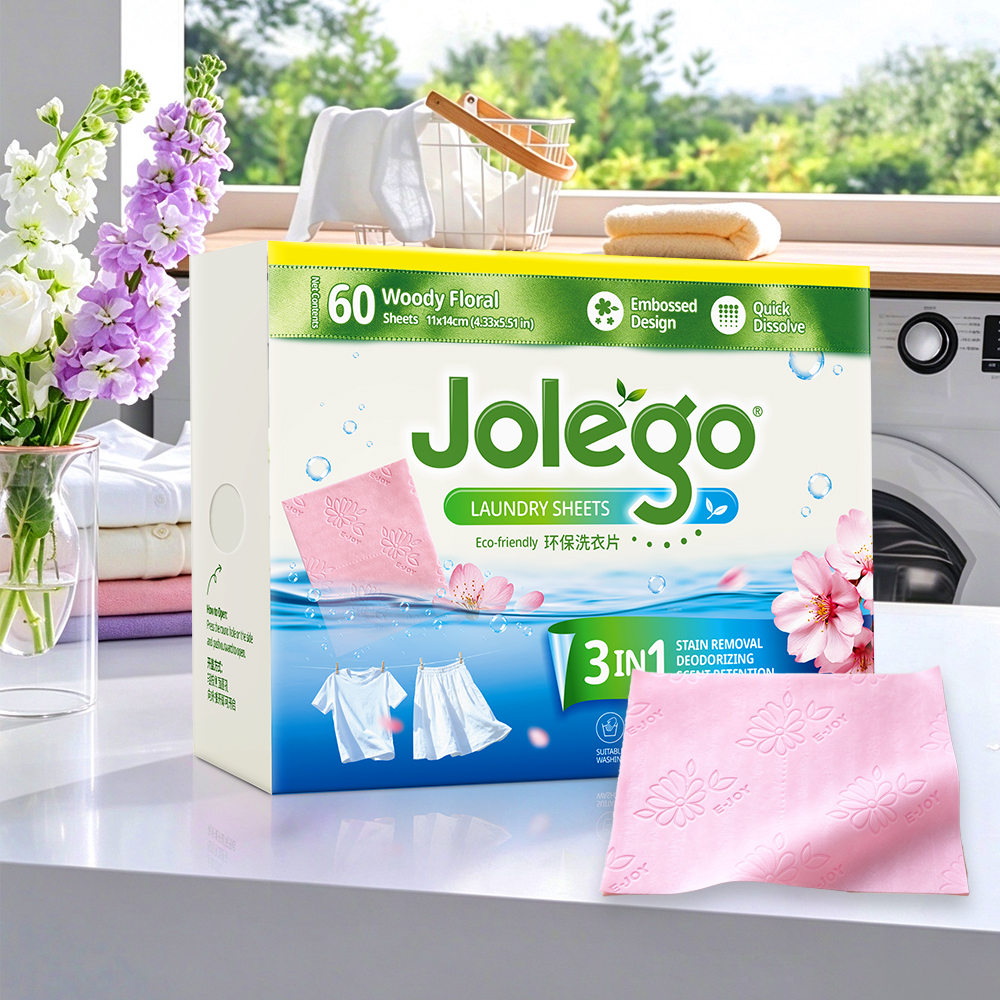
Paper boxes provide a firm outer package. They also offer space for product information and brand design.
For example, buyers can print the logo, product name, usage instructions, and other details on the box.
However, paper alone may not provide enough moisture protection. Therefore, an inner protective pouch may be needed.
D. Pouches with Outer Boxes
Some brands use an inner pouch with an outer paper box.
The inner pouch holds the sheets. Meanwhile, the outer box supports product display and branding.
This format may suit retail projects. However, buyers should consider the extra material and packing costs.
02. How to Choose Laundry Sheets Packaging Materials?
Material selection affects product protection, printing, and cost.
Therefore, buyers should ask the manufacturer about the material structure before placing an order.
Flexible Packaging Materials
Flexible packaging can use different plastic film structures. Some packages use more than one layer.
Depending on the design, these materials may provide:
- Moisture protection
- Heat-sealing performance
- Flexible package shapes
- Custom printing
- Different levels of strength
In addition, buyers should ask about material thickness and sealing tests. These details help them compare different suppliers.
Paper-Based Materials
Paperboard is often used for outer boxes.
It provides a firm surface for printing. Also, it allows brands to add product details and visual elements.
However, paper boxes may need an inner bag. This is important when the product needs extra protection from moisture.
Recyclable Packaging Choices
Some buyers also want to reduce packaging waste.
For example, they may ask about recyclable materials or lighter packaging designs.
However, not every material is suitable for every product. Buyers should check local recycling rules and product protection needs first.
For EU market projects, buyers can review the European Commission’s packaging waste information. This can help them understand packaging rules and material requirements.
03. How to Customize Packaging for Private Label Laundry Sheets?
Custom packaging helps brands create their own product identity.
However, the available services depend on the manufacturer’s printing and packaging capabilities.
A. Brand Logo and Artwork
First, buyers can discuss logo placement and packaging artwork.
They may provide their own design files. Alternatively, they can work with a designer to prepare the artwork.
Before printing, both sides should check:
- Logo size and position
- Brand colors
- Product name
- Product information
- Usage instructions
- Required labels and warnings
In addition, buyers should review the final artwork before approving production.
B. Package Size and Capacity
Package size should match the product quantity.
For example, a small retail pack may need a different pouch size from a larger wholesale pack.
Therefore, buyers should confirm the number of sheets, sheet dimensions, and total package weight before finalizing the design.
C. Printing and Surface Finish
Packaging appearance can change through different printing and finishing methods.
Depending on the supplier, options may include:
- Matte or glossy finishes
- Custom printed colors
- Product images and graphics
- Printed brand information
- Different label layouts
Also, buyers should request a digital proof or physical sample before approving mass printing.
04. How to Choose the Right Package for Your Business?
The right package depends on your business model and product needs.
Before making a decision, consider these five points.
Target Sales Channel
First, consider where the product will be sold.
For example, supermarkets may need retail-ready packages. Online sellers may also need packaging that can handle shipping and storage.
Product Protection
Laundry sheets should be protected from moisture during storage and transport.
Therefore, buyers should discuss material barriers, sealing methods, and storage conditions with the manufacturer.
Packaging Cost
Different materials and printing methods can affect the unit price.
In addition, custom printing may require a minimum order quantity. Buyers should compare the full packaging cost rather than looking only at the product price.
Brand Positioning
Packaging should match the brand’s market position.
For example, a simple design may suit a value-focused product. A printed box may suit a different retail style.
Destination Market
Different countries may have different packaging and labeling rules.
Therefore, check local requirements before approving the final artwork. This may include language, product information, safety instructions, and recycling labels where required.
05. How Does Custom Laundry Sheets Packaging Work?
A clear packaging process helps reduce design errors and production delays.
STEP 01
Select a Packaging Format
First, choose a pouch, box, or another suitable format. Then, discuss the required pack size with the manufacturer.
STEP 02
Confirm Material Requirements
Next, discuss material structure, moisture protection, sealing, and storage needs.
STEP 03
Prepare Packaging Artwork
Provide your logo and design files. Also, confirm product details and required label information.
STEP 04
Review Packaging Samples
Before mass production, check the package size, printing, sealing, and product fit. Then, approve the final sample.
STEP 05
Confirm MOQ and Production
Finally, confirm printing quantity, packaging MOQ, costs, and production time before placing the order.
06. What Should B2B Buyers Ask an OEM Manufacturer?
Before confirming a packaging order, buyers should ask the manufacturer for clear information.
| Question | Why It Matters |
|---|---|
| What formats are available? | To compare packaging options. |
| What materials can be used? | To check product protection. |
| Can I use my own artwork? | To confirm branding support. |
| What is the packaging MOQ? | To plan the first order. |
| Are samples available? | To review the package before production. |
| How long does printing take? | To plan the order schedule. |
In addition, buyers should confirm whether the packaging materials and printing can meet the requirements of their destination market.
07. Working with E-JOY on Laundry Sheets OEM Projects
Guangdong E-JOY Daily Necessities Co., Ltd. works in the household cleaning product industry.
For private label buyers, packaging requirements can be discussed as part of the product sourcing process.
Buyers can share their preferred package format, brand artwork, product quantity, and target market. Then, the project requirements can be reviewed with the manufacturer.
To learn more about the company and its products, visit the E-JOY official website.
If you already have a packaging plan, you can also contact the E-JOY team to discuss your OEM project.
08. Frequently Asked Questions
What packaging is commonly used for laundry sheets?
Stand-up pouches, flat pouches, and paper boxes are common options. The suitable format depends on the product and sales channel.
Can I customize laundry sheets packaging with my own logo?
Yes. Buyers can discuss custom logos and printed artwork with the manufacturer. The available printing methods depend on the packaging supplier.
Can laundry sheets use paper packaging?
Paper boxes can be used as outer packaging. However, buyers should check whether an inner protective layer is needed to control moisture.
Can I choose different package sizes?
Many packaging projects allow different sizes. Buyers should confirm sheet quantity, dimensions, and package capacity with the manufacturer.
Does custom packaging have a separate MOQ?
It may do so. Printed pouches and boxes can have separate minimum order quantities. Therefore, ask for packaging costs and MOQs separately.
How can I check packaging quality?
Request a packaging sample. Then, check its size, printing, sealing, material, and ability to protect the product.
Conclusion
Choosing the right package is an important step in private label laundry sheet production.
Stand-up pouches, flat pouches, paper boxes, and combined formats can suit different business needs.
However, packaging should not be selected based on appearance alone. Buyers should also consider material structure, moisture protection, printing, MOQ, and destination market rules.
Before bulk production, review the packaging sample and approve the final artwork. This helps both sides confirm the details before the order moves forward.
START YOUR PRIVATE LABEL PROJECT
Need Custom Laundry Sheets Packaging?
Share your preferred packaging format, artwork, product quantity, and target market with E-JOY. Our team can discuss your project requirements.