
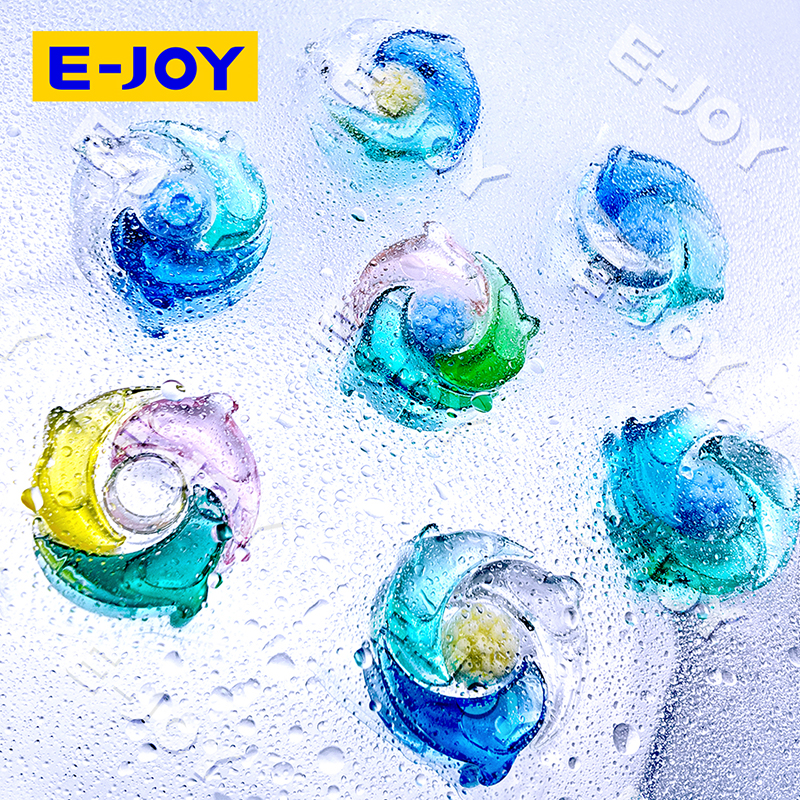
Laundry pods quality control protects the brand at three points. Incoming material, in-process production, and final release all need a check. However, the real value comes from agreeing on those checks before the order starts.
QUALITY LAYERS
Where to check.
What to record.
Incoming: Film, fragrance, and packaging.
In-process: Pod weight, seal, and look.
Final: AQL sampling and release.
This article explains how quality control usually works for laundry pod orders. It does not describe one factory’s full system. Therefore, ask your supplier to confirm each check for your product.
E-JOY lists ISO 9001 and ISO 22716 among its quality references. In addition, its about page gives factory scale and certification details.
01 · INCOMING
Check materials before production starts
Material checks catch problems early. Film, fragrance, and packaging all need a look. Film thickness affects seal strength. By contrast, fragrance quality affects scent consistency. For example, a weak fragrance lot can change the whole batch.
Ask for a material certificate with each lot. A certificate of analysis, or CoA, is common for chemical inputs. However, a CoA does not replace a physical check. As a result, keep both the paper and the sample.
Packaging needs a check too. Print color and board strength matter. Therefore, confirm the pack spec before the run begins.
A USEFUL QUESTION
“Which incoming checks do you record, and can I see a sample record before the order?”
02 · IN-PROCESS
Watch weight, seal, and appearance
In-process checks catch drift. Pod weight is the first measure. A light pod means less formula. A heavy pod may leak or fail to seal. Meanwhile, seal integrity decides whether the pod survives shipping.
Appearance matters as well. Color and shape should match the approved sample. In addition, chamber separation must hold. Therefore, keep a reference sample at the line.
Some factories test dissolution during the run. A pod that fails to dissolve leaves residue on fabric. As a result, this check protects the end user.
03 · FINAL
Use AQL sampling before release
Final checks decide release. AQL sampling is the common method. The buyer and supplier agree on a sample size and a defect limit. Therefore, both sides know the pass rule in advance.
Defects are usually grouped by severity. Critical defects block release. Major defects may need a re-check. Minor defects may pass with a note. As a result, the report should list each group.
Keep the inspection report with the order file. Also, keep photos of the sampled cartons. In addition, confirm who signs the release.
Quality checklist
- Incoming material record agreed
- Pod weight range confirmed
- Seal and appearance criteria set
- AQL level and defect groups defined
- Inspection report format approved
- Release sign-off named
Questions from OEM buyers
Who sets the AQL level?
Both sides agree on it. The buyer states the risk level. The supplier confirms it can meet that level. Therefore, put the agreed level in the order file.
Can a third-party inspector join the final check?
Usually, yes. Many buyers use a third-party inspection firm. In contrast, some rely on the factory report. Confirm the rule before the run starts.
What happens if a batch fails?
The batch does not ship. The supplier then reviews the cause. As a result, the fix may need a re-run or a sorting step. Keep the failed report for the record.
SET YOUR CHECKS
Discuss your laundry pods quality control plan
To discuss laundry pods quality control, send your brief to the E-JOY contact page. Add your target AQL level, check points, and release rule.
For product references, browse the E-JOY Alibaba storefront. Then ask the team to confirm the inspection process for your order.